In the world of fluid control, gate valves and ball valves are two of the most commonly used types of valves. As a gate valve supplier, I’ve had the privilege of witnessing firsthand the unique characteristics and applications of both valve types. In this blog post, I’ll delve into the differences between gate valves and ball valves, shedding light on their design, operation, performance, and ideal use cases. Gate Valve

Design and Structure
Gate valves are characterized by a flat gate or wedge that moves up and down to control the flow of fluid. The gate is typically made of metal and is designed to form a tight seal against the valve seat when fully closed. Gate valves are available in various configurations, including rising stem and non – rising stem designs. In a rising stem gate valve, the stem rises out of the valve as it is opened, providing a visual indication of the valve’s position. Non – rising stem gate valves, on the other hand, have a stem that rotates but does not rise, making them suitable for applications where space is limited.
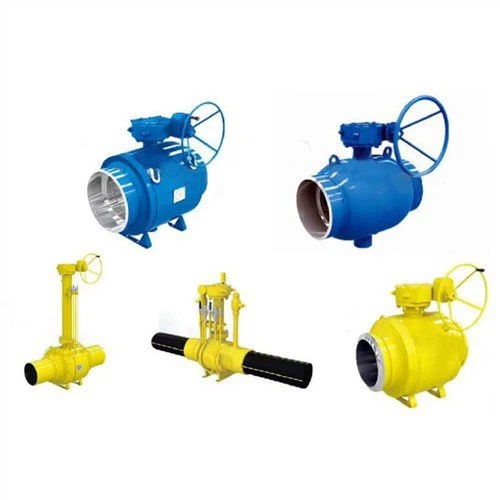
Ball valves, on the other hand, feature a spherical disc with a hole in the center. The ball rotates within the valve body to control the flow of fluid. When the hole in the ball is aligned with the flow path, the valve is open, allowing fluid to pass through. When the ball is rotated 90 degrees, the hole is perpendicular to the flow path, and the valve is closed. Ball valves are known for their simple and compact design, which makes them easy to install and maintain.
Operation
One of the key differences between gate valves and ball valves lies in their operation. Gate valves are typically operated by turning a handwheel or using an actuator to move the gate up or down. The operation of a gate valve is relatively slow, as it requires multiple turns of the handwheel to fully open or close the valve. This slow operation is beneficial in applications where a gradual change in flow rate is required, such as in water supply systems or industrial processes where sudden changes in flow can cause damage.
Ball valves, on the other hand, can be operated quickly with a quarter – turn of the handle or actuator. This rapid operation makes ball valves ideal for applications where quick shut – off is required, such as in emergency situations or in systems where the flow needs to be stopped immediately. The quarter – turn operation also makes ball valves more convenient to use, especially in applications where frequent opening and closing is necessary.
Sealing Performance
Sealing performance is another important factor to consider when comparing gate valves and ball valves. Gate valves are designed to provide a tight seal when fully closed, preventing leakage of fluid. However, over time, the gate and seat of a gate valve can wear, leading to leakage. This is especially true in applications where the valve is frequently opened and closed or where the fluid contains abrasive particles.
Ball valves, on the other hand, offer excellent sealing performance due to the spherical shape of the ball and the tight fit between the ball and the valve seat. The quarter – turn operation of the ball valve ensures a positive seal, even after repeated use. Ball valves are also less prone to wear and tear compared to gate valves, making them a more reliable choice for applications where long – term sealing performance is required.
Flow Characteristics
The flow characteristics of gate valves and ball valves also differ significantly. Gate valves have a straight – through flow path, which means that the fluid flows in a straight line through the valve when it is open. This results in low pressure drop across the valve, making gate valves suitable for applications where a high flow rate is required. However, when the gate valve is partially open, the flow can become turbulent, leading to increased pressure drop and potential damage to the valve.
Ball valves, on the other hand, have a full – port or reduced – port design. Full – port ball valves have a hole in the ball that is the same size as the pipe, allowing for unrestricted flow and minimal pressure drop. Reduced – port ball valves have a smaller hole in the ball, which can result in a slightly higher pressure drop but is still suitable for most applications. The spherical shape of the ball also allows for smooth flow, even when the valve is partially open.
Ideal Use Cases
Based on their design, operation, sealing performance, and flow characteristics, gate valves and ball valves are suitable for different applications.
Gate valves are commonly used in applications where a full – open or full – closed position is required, such as in water supply systems, sewage treatment plants, and industrial pipelines. They are also suitable for applications where a gradual change in flow rate is needed, such as in regulating the flow of liquids in a process.
Ball valves, on the other hand, are ideal for applications where quick shut – off is required, such as in fire protection systems, gas pipelines, and chemical processing plants. They are also well – suited for applications where frequent opening and closing is necessary, such as in automated systems.
Conclusion
In conclusion, gate valves and ball valves are two distinct types of valves with their own unique advantages and disadvantages. As a gate valve supplier, I understand the importance of choosing the right valve for the specific application. While gate valves offer a tight seal and low pressure drop in full – open position, ball valves provide quick operation and excellent sealing performance. By understanding the differences between these two valve types, you can make an informed decision when selecting a valve for your project.
Butterfly Valve If you’re in the market for high – quality gate valves or have any questions about valve selection, I’d be more than happy to assist you. Feel free to reach out to me to discuss your specific requirements and explore how our gate valves can meet your needs. Let’s work together to find the perfect valve solution for your application.
References
- "Valve Handbook", by E. F. Budris
- "Fluid Mechanics and Thermodynamics of Turbomachinery", by S. L. Dixon
- "Piping and Pipeline Engineering: Design, Construction, Maintenance, Integrity, and Repair", by Mohammad Modarress, Bahman Ghalambor, and Ali Haghighi
Zhejiang Sunawei Valve Co., Ltd.
As one of the most professional gate valve manufacturers and suppliers in China, we offer a wide range of valves with superior quality. Please feel free to wholesale high quality gate valve at competitive price from our factory. We also accept customized orders.
Address: Anfeng Industrial, Oubei Town, Wenzhou City, Zhejiang, China
E-mail: snv@sunawevalve.com
WebSite: https://www.sunay-valves.com/
