If you’ve ever walked a construction site in your region, you’ve probably stood beside me as a supplier of plate compactors, watching the hum of equipment shape the ground beneath your feet. For years, I’ve fielded the same question from contractors, project managers, and even small business owners: “Can a plate compactor really hold up for a large-scale project?” I get it—when you’re talking about highway extensions, commercial building foundations, or large-scale infrastructure, you picture mammoth rollers, fleets of machinery, and teams of specialized operators. Plate compactors, often associated with smaller tasks like backyard pavers or residential driveways, seem too small, too niche, for work that covers acres or requires uniform compaction across thousands of square feet. But after 12 years in this business, working with teams on projects from regional warehouse foundations to secondary road repaving, I’m here to tell you that the answer isn’t a simple yes or no—it’s a nuanced, project-dependent yes, with caveats that come down to matching the right plate compactor to your specific large-scale needs. Plate Compactor
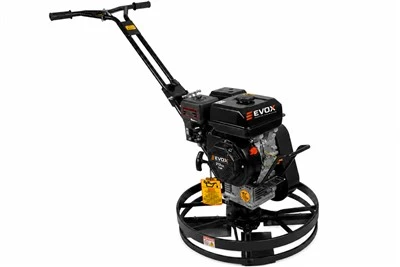
Let’s start with what a plate compactor actually does, because that’s where a lot of the confusion starts. Unlike a large asphalt roller, which applies static weight to flatten surfaces, plate compactors use a reciprocating motor to vibrate a thick, rigid metal plate that rests on the ground. That vibration transfers energy deep into soil or aggregate, rearranging the particles to eliminate air pockets and create a dense, stable base. For small projects, like a 100-square-foot patio, a 2,000-pound plate compactor is more than enough. But for large-scale work, the key is that “large” doesn’t mean “one-size-fits-all.” When I first got into this industry, I’d see general contractors show up to a 10-acre site with a handful of 3,000-pound plate compactors and call it a day, only to end up with uneven compaction that required rework and cost thousands in delays. That mistake taught me a critical lesson: plate compactors are not replacements for large rollers, but they are powerful supplements that can fill gaps where big machinery can’t reach—if you choose the right models and use them strategically.
Take a recent project I supported, a 28-acre industrial development for a logistics company. The main road leading to the warehouse was 1.2 miles long, 80 feet wide, and required compaction to a depth of 12 inches, per state transportation standards. The general contractor initially planned to rent three 10-ton rollers for the entire job, but halfway through site prep, they hit a section of the property with steep slopes and uneven terrain where the rollers couldn’t maneuver without risking damage to the existing soil and nearby utility lines. That’s when they reached out to us for additional equipment: four of our heavy-duty 6,500-pound forward-moving plate compactors, paired with two reversible models for the tightest corners. Over three weeks, the plate compactors were used to compact all the slope areas, the sections within 2 feet of underground utilities, and the edge lines where the rollers couldn’t fit. The final compaction test results from the third-party inspector showed a 96% proctor density across the entire site—well above the 92% required for commercial road projects. The general contractor ended up finishing the job 5 days early, avoiding thousands in penalty fees, and cited the plate compactors as the key piece that kept the project on track. That’s the power of plate compactors on large-scale projects: they don’t replace big rollers, but they solve problems that big rollers can’t.
Of course, that’s not to say plate compactors are the right fit for every large-scale job. There are two types of large-scale projects where plate compactors aren’t the primary solution: first, full-width paving projects that require consistent compaction across a wide, flat surface, and second, projects that need deep compaction (more than 12 inches) across the entire area. For example, when you’re paving a 4-lane highway, you’ll still use large static or vibratory rollers for 90% of the work, because those machines cover 8 feet or more per pass, compared to a plate compactor, which covers between 2 and 4 feet per pass. That makes rollers far more efficient for large, flat areas, where speed and uniform compaction are top priorities. But even on highway projects, you’ll see plate compactors used for edge compaction, for compacting the base under guardrail posts, and for repairing small sections that get damaged during the paving process. It’s all about niche applications within a much larger project.
Another key factor that contractors often overlook when considering plate compactors for large-scale work is operator training and project planning. Plate compactors, even the heavy-duty models, are smaller than rollers, but they still require skilled operation to get consistent results. On the logistics development project, we provided two on-site training sessions for the operators who would be running the plate compactors, teaching them to overlap each pass by 6 inches, to adjust the speed of the compactor based on soil type, and to test compaction density every 50 feet. Without that training, the operators might have missed spots on the slopes, or over-compacted certain areas, leading to uneven ground. That’s why I always advise large-scale project managers to build plate compactors into their plan from the start, not as an afterthought. If you wait until you’re already behind schedule, you might end up rushing the training or using untrained operators, which can lead to costly mistakes.
Now, let’s talk about the tangible advantages that plate compactors bring to large-scale projects, beyond just fitting into tight spaces. First, they’re more affordable to operate than large rollers for niche tasks. A 10-ton roller can cost $150 to $200 per day to rent, plus the cost of fuel and a specialized operator. A heavy-duty plate compactor costs $60 to $80 per day to rent, can be operated by a standard construction worker (with basic training), and uses far less fuel. For projects with small, complex areas, that adds up to significant savings. Second, plate compactors are much easier to transport than large rollers. A single 6,500-pound plate compactor can fit in the bed of a standard flatbed truck, no permits required, whereas a large roller needs a lowboy trailer and special transportation permits. That’s a huge benefit for projects that are spread out over a wide area, or that have multiple access points. On a recent project in a rural part of the state, the construction team had to move compaction equipment between three separate building sites, each 5 miles apart. Using plate compactors meant they could move the equipment in 15 minutes, instead of the 2 hours it would take to move a roller, which saved them 8 full days of labor over the course of the project.
But we can’t ignore the limitations. The biggest downside of plate compactors for large-scale work is their lower coverage rate. On a flat, open site, a single plate compactor can cover about 1,500 square feet per hour, while a roller can cover up to 10,000 square feet per hour. That means using plate compactors for an entire large-scale project would take 6 to 7 times longer than using rollers, which would likely delay the project and increase labor costs. Another limitation is depth of compaction. Most heavy-duty plate compactors can compact soil to a depth of 10 to 12 inches, while vibratory rollers can compact to a depth of 2 feet or more. That makes rollers the only option for projects that need deep compaction, like building a high-rise foundation in an area with soft soil. So, the takeaway here is: plate compactors are not a replacement for large rollers, but they are a complementary tool that can make large-scale projects more efficient and cost-effective, when used in the right areas.
Over the years, I’ve seen plate compactors evolve to meet the needs of larger projects, too. When I started in this business, most plate compactors topped out at 4,000 pounds, with a maximum compaction depth of 8 inches. Today, our heavy-duty models go up to 7,000 pounds, with variable vibration frequencies, reversible plates for tight spaces, and digital compaction sensors that track density in real time. That technology has eliminated a lot of the guesswork involved in using plate compactors on large sites. On the warehouse project, the operators used our models with built-in density sensors, which told them exactly where compaction was complete, so they didn’t have to stop every 50 feet to take manual tests. That cut their time on the slope areas by 30%, compared to similar projects before we had that technology. It’s also made plate compactors more reliable for large-scale work, because you can get accurate, consistent results without extra labor.
So, what does this mean for you, whether you’re a project manager, a general contractor, or someone who just wants to make informed decisions about construction equipment? If you’re working on a large-scale project—think highways, commercial foundations, industrial developments, or road repaving—plate compactors can absolutely play a critical role. The key is to assess your project’s specific needs: look for areas that are too tight for large rollers, sections that require deep edge compaction, or zones where you need flexibility in equipment transport. Plate compactors are not the primary workhorse for most large-scale jobs, but they are the Swiss Army knife of construction equipment: versatile, affordable, and essential for getting the job done right, even in the most challenging spots.
After 12 years in this industry, I’ve worked on projects where plate compactors were the unsung heroes, and a few where contractors tried to use them for tasks they weren’t designed for, leading to delays and extra costs. The biggest mistake I see people make is writing off plate compactors as too small for large-scale work, instead of finding ways to integrate them into their existing plan. If you’re currently planning a large-scale project and you’re not sure whether plate compactors can help, don’t guess—reach out. I’ve helped hundreds of teams assess their needs, choose the right models, and even provide on-site support to make sure they get the results they need. There’s no one-size-fits-all answer for large-scale construction, but there is a solution for every challenge—sometimes, it’s a plate compactor.
If you’re looking to discuss how plate compactors can fit your next large-scale project, don’t hesitate to get in touch to connect with our team for procurement discussions.
Cast Iron Diesel Water Pump References
- National Ready Mixed Concrete Association. (2021). Compaction Requirements for Commercial Construction Projects. NRMCA Technical Report.
- Construction Equipment Association. (2022). Plate Compactor Applications in Large-Scale Infrastructure Development. CEA Equipment Guide.
- Federal Highway Administration. (2020). Compaction Standards for Local Road and Bridge Projects. FHWA Publication.
- Occupational Safety and Health Administration. (2021). Equipment Operator Training Requirements for Construction Machinery. OSHA Safety Bulletin.
Evoxpower Technology
Evoxpower Technology is one of the most professional plate compactor manufacturers and suppliers in China, featured by quality products and good service. Please rest assured to buy the newest plate compactor in stock here and get pricelist from our factory. Contact us for customized service and OEM service.
Address: 11 Fortune Avenue, Yubei District, Chongqing, China
E-mail: stephen@allrightpower.com
WebSite: https://www.evoxpower.com/
