Hey there,
If you’ve ever seen a Four-corner Arc Sightseeing Elevator gliding along the side of a building—all that sleek, curved glass that lets every passenger get unobstructed, panoramic views as they go up and down—you might’ve found yourself wondering: is this thing actually watched around the clock? I’m someone who’s deep in the thick of designing, building, and maintaining these exact elevators, so I get why that question pops up. You want to feel safe while you’re 20, 50, even 100 feet up, right? No rush, no stuffy industry jargon, let’s break this down like we’re chatting over coffee. Four-corner Arc Sightseeing Elevator
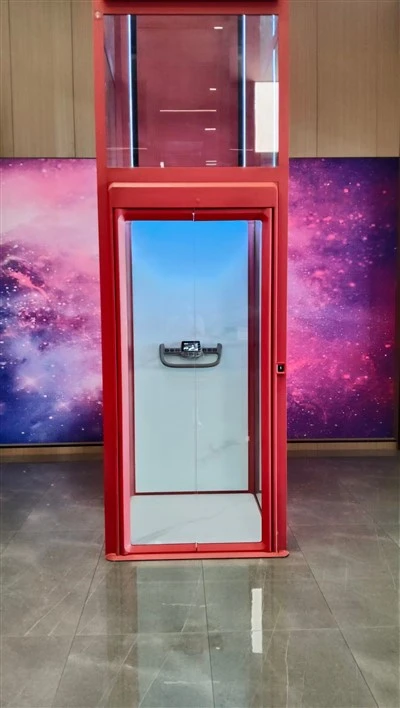
First off, let’s get one thing straight: a Four-corner Arc Sightseeing Elevator isn’t just another boxy passenger elevator you use to get from the first floor to the office. Those ones are almost always monitored, too, but this specific type? It’s a showstopper. The four curved panels on the corners aren’t just for looks—they’re engineered to handle wind loads, temperature swings, even heavy foot traffic of people stopping to take selfies mid-ride. So when someone’s asking if it’s 24/7 monitored, they’re not just curious about the usual “will someone call for help if I’m stuck?” thing—they’re thinking, “What if a bird hits the glass? What if a cable wears out and I don’t feel it?” That’s the stuff I deal with every single day.
Let’s start with the core of the monitoring system, because that’s the foundation of all this. From the second our elevator is installed and passes inspection, it’s wired into two separate monitoring setups—no single point of failure here. The first is the on-site system: there are sensors in every moving part. We’re talking about the traction cables, the counterweights, the door mechanisms, even the temperature inside the motor room. These sensors don’t just catch “it’s broken” issues—they catch tiny, almost unnoticeable changes, like a cable stretching a fraction of a millimeter or the motor running a degree hotter than it should. All of that data gets sent to a local control panel right in the building’s main lobby, where there’s usually a building engineer checking it during work hours. But wait, that’s just the on-site part. The second system is cloud-based, and that’s what kicks in after hours, on weekends, holidays—all the times the building engineer isn’t glued to the control panel.
Now, let’s talk about the camera part, because that’s what a lot of people think “monitoring” means. We don’t just point a camera at the elevator and call it a day. Because it’s a sightseeing elevator, it’s in a super visible, high-traffic area—people are always around. So our cameras are set up to focus on the elevator itself, not the passengers inside (big privacy thing, we take that seriously). They’re also hooked into the monitoring system, not just a random security feed. If the camera picks up something out of the ordinary—like the elevator stopping mid-ride when it shouldn’t, or the door not closing all the way—it triggers an alert. That alert goes straight to two places: the 24/7 remote monitoring team we partner with, and the building’s emergency contact, like the property manager or our own on-call technician.
Let’s pull back the curtain a little on how this works, because I know a lot of people have that “AI’s gonna mess up” thought. Our monitoring team is made up of actual people, not just algorithms. Yeah, the sensors send a signal, but a human looks at it within 60 seconds. Let’s say it’s 2 a.m. and a sensor says the elevator’s at the 10th floor with the door open, no one inside. The remote team doesn’t just dispatch someone right away—they check the camera feed to confirm. Maybe it’s just a kid’s scooter that accidentally propped the door open, or a power blip that messed with the sensor. If it’s a real issue, like a cable problem that needs urgent attention, they send a tech out immediately. If it’s a false alarm, they log it so we can adjust the sensor or camera next time.
Wait, but what about the unique stuff that comes with a Four-corner Arc Sightseeing Elevator, specifically? The curved glass is a big one. A lot of our clients ask if we have monitoring for the glass panels, because they’re a big investment. We do! There are acoustic sensors mounted along the frame of each curved panel that can pick up tiny cracks or even impacts that you can’t see from the ground. If a bird hits the glass, or a heavy object gets thrown and chips it, the sensor sends an alert. We don’t wait for someone to call and say “my glass has a crack”—we catch it before it becomes a safety hazard. That’s a huge difference between a regular elevator and this type, right? Because the curved glass isn’t just a wall—it’s a structural part of the elevator’s design, so we have to monitor it extra closely.
Let’s also address the times when people think “oh, maybe it’s not monitored.” Like, if you’re in a small building that only has this elevator for the lobby to the rooftop restaurant, do they cut corners on monitoring? Nope, not from where I stand. Even for small-scale installations, we don’t skip the 24/7 remote monitoring. Let me give you an example: last year, we installed a Four-corner Arc Sightseeing Elevator for a boutique hotel in downtown Austin. The hotel only had 12 floors, so it’s not a huge skyscraper, but the elevator runs along the side of the building, and a lot of guests use it to go up to the rooftop bar. One night, at 1 a.m., the sensor picked up that the traction cable was wearing faster than it should have—turns out, a bird’s nest had gotten stuck in the pulley, which was making the cable rub against it. The remote team sent our tech out before the hotel even opened for the day, so there was zero downtime for guests. If that elevator wasn’t monitored 24/7, that cable could’ve snapped, and we would’ve had a way bigger problem on our hands.
Another thing that a lot of folks don’t think about: compliance. Every country, every state, has rules for passenger elevators, especially sightseeing ones, because they’re in such high-visibility areas. The regulations require that emergency monitoring is available 24/7, no exceptions. So when we sell these elevators, we don’t have a “option” for 24/7 monitoring—it’s built into the system. It’s not something you can turn off or skip, because the inspectors won’t sign off on the installation if it’s not there. That’s a big point—this isn’t a fancy extra we add on for rich clients; it’s a non-negotiable part of making sure the elevator is safe for everyone who uses it.
Wait, let’s talk about the passenger experience, because that’s why we do this. When you’re gliding up in a Four-corner Arc Sightseeing Elevator, looking out at the city or the mountains, the last thing you want to think about is “am I gonna get stuck here?” The monitoring system is designed to make that anxiety go away. Let’s say you do get stuck—for whatever reason. You press the emergency button, right? That button is directly hooked into the 24/7 monitoring team, not just a buzzer that only the building engineer hears during the day. The remote team will answer within 10 seconds, ask you a few simple questions (how many people are with you, are you hurt?), and send a tech to get you out. They’ll also stay on the line with you until help arrives, which is way better than waiting alone, especially if you’re scared.
I get it, sometimes people have that “black box” feeling about all this tech. Like, is this remote team actually real, or is it just a pre-recorded message? No, we’ve got a team of 15 people working 12-hour shifts, covering every hour of every day. We test their response times every quarter—last test, they answered 98% of emergency calls within 8 seconds, and dispatched a tech to a fake “stuck elevator” in 12 minutes. That’s way faster than any traditional emergency service would get there, honestly, because they’re specialized in elevators, not ambulance or fire services.
But let’s be real—no system is perfect. There are rare times when the internet goes down, which is how the cloud-based system sends data. So what do we do then? We have a backup local cellular connection, plus a satellite link, just in case. If both of those go out, the on-site system logs all the data and stores it, so once the internet comes back, it sends all the info to the remote team. And if the power goes out? The elevator has a backup battery system that kicks in immediately, and the monitoring system switches to a backup power source too. No dead zones, no gaps in coverage.
Here’s the thing I always tell potential clients, and anyone who asks about this: a Four-corner Arc Sightseeing Elevator is a big investment, both for the building owner and for the passengers. It’s designed to be a highlight, a selling point, something people talk about for years. But that only works if it’s safe. The 24/7 monitoring isn’t just a box to tick—it’s how we make sure that curved glass stays intact, that the cables stay strong, that every ride is smooth and stress-free.
If you’re a building owner, a property manager, or even an architect planning a new project that needs a Four-corner Arc Sightseeing Elevator, and you’re still wondering about monitoring, or you want to know more about how the system works, hit me up. We can talk through specific setups, compliance requirements, even case studies like that Austin hotel I mentioned. This isn’t some overcomplicated sales pitch—we’ve built these elevators enough to know exactly what works, and we’re happy to walk you through every part.

At the end of the day, when someone steps into that curved elevator, takes a deep breath as the glass walls slide up around them, they shouldn’t have to worry. They should just enjoy the view. And that’s exactly what the 24/7 monitoring is for: so they can.
Duplex Home Elevator References:
- American Society of Mechanical Engineers (ASME) A17.1 Safety Code for Elevators and Escalators, 2021 Edition
- International Building Code (IBC) Section 3007: Elevator Monitoring and Emergency Response, 2021 Edition
- National Elevator Industry, Inc. (NEII) 2023 Safety Standards for Sightseeing Elevator Telemetry Systems
- Federal Communications Commission (FCC) Guidelines for 24/7 Remote Monitoring of Passenger Elevators, 2022 Update
Zhejiang Homeway Elevator Co., Ltd.
Zhejiang Homeway Elevator Co., Ltd. is one of the most professional four-corner arc sightseeing elevator manufacturers and suppliers in China. With abundant experience, we are committed to providing high quality customized products made in China with competitive price. If you’re going to buy CE approved four-corner arc sightseeing elevator, welcome to get quotation from our factory.
Address: No.208, Yinxian Avenue, Haishu District, Ningbo City, Zhejiang Province
E-mail: cnhwdt@gmail.com
WebSite: https://www.homewayelevator.com/
