If you’ve ever walked past an industrial pipeline network—whether it’s at a water treatment plant, a refinery, or a municipal wastewater facility—you’ve probably seen elbow repair clamps tucked into the nooks of those pipe turns. Those unassuming curved metal bands don’t get the fanfare of big machinery or high-tech sensors, but they’re the unsung heroes stopping small leaks from becoming catastrophic failures. As a supplier who’s worked with these clamps for over a decade, I get asked this question more than any other: “What’s the maximum pressure an elbow repair clamp can actually withstand?” It’s not a one-size-fits-all answer, and if you’re spec’ing, installing, or replacing these clamps, getting it right is the difference between a pipe shutdown and peace of mind. Elbow Repair Clamp
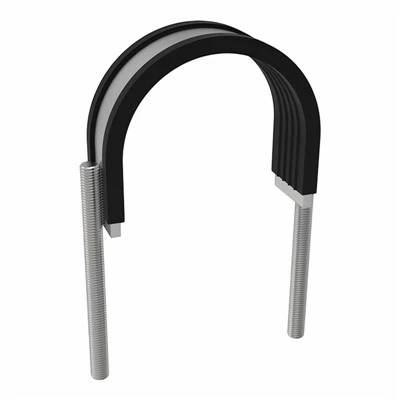
First, let’s set a baseline: an elbow repair clamp isn’t the same as a standard straight-pipe repair clamp. A straight clamp is designed for even, uniform surface contact along a straight pipe, distributing pressure evenly across a round, consistent exterior. Elbows? They’re curved. They have a weld seam, a possibly rough exterior from years of corrosion, and a shape that means the clamp’s material has to stretch and conform differently at the inner radius, outer radius, and the two straight ends that connect to the elbow. That curve is where most pressure limits get tested—literally and figuratively.
So, how do we determine maximum pressure? It starts with the elbow itself. No clamp works better than the pipe it’s attached to. If your 8-inch steel elbow is rated for 150 psi (pounds per square inch), your clamp can’t magically make it hold 250 psi. That’s a hard rule I drill into every customer who calls in asking for a “heavy-duty clamp for a low-rated pipe.” The pipe’s material, wall thickness, original design pressure, and even its age matter. A new schedule 40 carbon steel elbow has a much higher rated pressure than a 40-year-old cast iron elbow with pitting and a history of leaks.
Next, the clamp’s construction is non-negotiable. At our facility, we test every clamp we ship to match specific pressure ratings, and we categorize them by design. The three most common types we supply are:
-
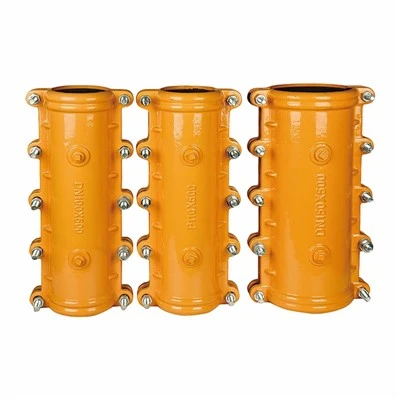
Standard Repairable Elbow Clamps: Built for small to medium leaks on low-pressure pipes, usually up to 150 psi. These are made from ductile iron or carbon steel, with a rubber gasket lining that conforms to the elbow’s curve. The gasket is critical here—if it’s the wrong material (say, natural rubber for a chemical application) or damaged during installation, the clamp can’t hold the full rated pressure. We see this mistake all the time: someone buys a cheap clamp with a generic gasket, installs it on a 12-inch water line, and wonders why it leaks at 120 psi instead of 150.
-
Medium-Duty Reinforced Elbow Clamps: For lines running 150 to 300 psi. These have extra steel plating along the outer radius of the elbow (the part that takes the most stress when the pipe is pressurized) and a more robust gasket, often EPDM or nitrile for better chemical and temperature resistance. We use these for municipal water mains, small process lines in refineries, and HVAC systems that handle higher pressures. Last year, a customer in Ohio called us panicking because their old clamp had failed on a 6-inch gas elbow running at 280 psi—they’d used a standard clamp meant for 150 psi, not our medium-duty version, and a small leak had turned into a 3-hour shutdown for repairs.
-
High-Pressure Elbow Repair Clamps: For lines rated above 300 psi, up to 1,000 psi in some custom applications. These are built with heavy-gauge alloy steel bolts, a full steel shell around the elbow (not just the curved band), and gaskets that can handle extreme temperatures and pressure without deforming. We make these to order for oil and gas transmission lines, high-pressure chemical processing plants, and fire suppression systems. Last quarter, we shipped a set of these to a power plant that needed clamps for 24-inch steam elbows running at 850 psi—we had to machine the clamps to fit the exact radius of their custom elbows, a detail that’s non-negotiable for high pressure.
But pressure isn’t just about the clamp’s rating. There are four other factors that can drop that maximum pressure by 20% to 50% if you don’t account for them. Let’s break these down because they’re the things that trip up even experienced pipefitters.
First, the condition of the elbow. Like I mentioned earlier, a pipe’s age and wear matter more than most people realize. An elbow that has a 1-inch corroded spot on the outer radius won’t hold the same pressure as a smooth elbow. Even a small dent or a failed weld seam can create a weak point that the clamp can’t compensate for. We always tell customers to pressure-test the elbow before installing a clamp—if the pipe itself leaks at 200 psi, don’t expect a clamp to hold it at 250 psi. That’s a common misconception: the clamp repairs the leak, it doesn’t fix a weak pipe wall.
Second, installation quality. I’ve seen clamps installed wrong that leaked at 50 psi, not their rated 300 psi. The bolt torque is huge here. If you over-tighten the bolts, you can crack the clamp’s shell or cut the gasket, creating gaps that leak. Under-tighten, and pressure will push the gasket out from between the clamp and the pipe, especially at the elbow’s curved points. We include a torque specification sheet with every clamp, and our technical support team will walk you through the process step by step if you call—no job is too small for that call. Last month, a pipefitter in Texas installed one of our medium-duty clamps on a 4-inch oil elbow and over-torqued the top bolt, cracking the steel shell. He called us upset, thinking the clamp was defective, and it turned out he’d used a ½-inch wrench instead of the torque wrench we specified. We sent him a replacement and a torque wrench on the house—stuff like that happens, and we’re here to fix it.
Third, temperature and media compatibility. Pressure and temperature go hand in hand. A clamp rated for 300 psi at 70°F might only hold 150 psi at 300°F, because the gasket material softens and the steel shell expands, reducing contact pressure. If you’re working with hot water, steam, or chemicals like sulfuric acid, you need a clamp rated for both pressure and the specific media it’s handling. We have gaskets made for every application: EPDM for water, nitrile for oil, Viton for harsh chemicals, and even stainless steel gaskets for ultra-high-temperature steam. Choosing the wrong gasket is one of the fastest ways to drop a clamp’s maximum pressure.
Fourth, the elbow’s radius and size. A 4-inch elbow with a 90-degree radius of 6 inches has a different pressure profile than an 8-inch elbow with a 10-inch radius. The larger the elbow, the more stress the clamp has to distribute, because the curve is longer. That’s why custom clamps are so common for elbows over 12 inches—standard off-the-shelf clamps won’t conform to the curve evenly, so their pressure rating drops significantly. For example, a standard 12-inch elbow clamp is rated for 150 psi, but a custom-machined clamp for the same size elbow can hold up to 250 psi, because it fits the curve perfectly.
Now, let’s talk real-world numbers, because that’s what people care about. In our in-house testing, which follows industry standards from the American Water Works Association (AWWA) and the Pipeline and Hazardous Materials Safety Administration (PHMSA), our standard repair clamps for 4- to 10-inch elbows hold up to 150 psi with no leaks, as long as the elbow is in good condition and installed correctly. Our medium-duty reinforced clamps hold up to 350 psi for the same size range, and our high-pressure custom clamps can go as high as 1,200 psi for elbows up to 36 inches. But here’s the catch: those numbers are lab-tested with a perfect, smooth elbow, a correctly sized gasket, and proper installation. In the field, we typically recommend derating those numbers by 10% to account for real-world variables like a slightly worn elbow or a minor installation misalignment.
I want to be clear about something: there’s no such thing as an “unlimited pressure” elbow repair clamp. Even the high-pressure custom ones have limits, and pushing past them is dangerous. Last year, we had a customer try to use one of our standard clamps on a 10-inch gas elbow that was running at 200 psi—our clamp was rated for 150 psi, and it burst, causing a small leak. Fortunately, no one was hurt, but it was a wake-up call. That customer had skipped our technical consultation, and it could have been a disaster.
So, if you’re trying to figure out the maximum pressure for your elbow repair clamp, here’s the step-by-step process we recommend every customer follows:
- Identify your elbow’s specifications: size, material, wall thickness, design pressure, and condition. Pressure-test the elbow first to confirm it can hold its rated pressure on its own.
- Note your system’s pressure and media: what’s the maximum operating pressure of your pipeline, and what’s it carrying (water, oil, steam, chemical)? Also, note the operating temperature.
- Match the clamp type to your needs: don’t buy a standard clamp for a medium-pressure line, or a high-pressure clamp when a standard one will work. That’s a waste of money, but also a safety risk.
- Follow installation instructions exactly: use a torque wrench, don’t over-tighten or under-tighten, and make sure the gasket is aligned and free of damage before installation.
- Test the clamp after installation: pressure-test the line with the clamp installed to make sure it holds the full system pressure before putting it back into regular service.
As a supplier, we don’t just sell clamps—we sell support. Every customer who calls us with questions about pressure ratings gets a free technical consultation from someone who’s installed these clamps in the field, not just read about them in a manual. We’ve worked on everything from small residential sewer lines to large refinery process lines, so we know what works and what doesn’t.
At the end of the day, the maximum pressure an elbow repair clamp can withstand isn’t a fixed number—it’s a combination of the clamp’s design, the pipe’s condition, the installation quality, and the demands of your specific system. Cutting corners on any of those will leave you with a clamp that doesn’t do its job, and a pipeline at risk of failure.
If you’re working on a project right now and need help figuring out the right clamp for your elbow, or if you have questions about pressure ratings, our team is ready to help. We can walk you through the specs, answer any technical questions, and make sure you get the right clamp for your application—no pressure, just clear, honest advice. Reach out to our team to discuss your needs, and we’ll help you make a safe, informed decision for your pipeline system.
Repair Clamp References:
AWWA Standard C228, 2020, Steel Repair Clamps for Pipelines
PHMSA Pipeline Safety Regulations: Repair of Buried Pipelines, Title 49 CFR Part 192
ASTM Standard F1476, 2021, Standard Specification for Gaskets for Pipe Repair Clamps
Pipeline Repair Clamp Design and Testing Manual, Hydraulic Institute, 2019
Fujian Fufa Valve Manufacturing Co., Ltd.
As one of the most professional elbow repair clamp manufacturers and suppliers in China, we’re featured by quality products and good price. Please rest assured to buy durable elbow repair clamp made in China here from our factory. Welcome to view our website for more information.
Address: Meilin Xikou Industrial Zone, Nan’an City, Quanzhou City, Fujian Province
E-mail: hongwenjin@fufafamen.cn
WebSite: https://www.fufavalve.com/
