If you’ve ever shipped something valuable overseas—whether it’s a vintage watch for a client, a batch of custom handcrafted goods, or even sensitive medical samples—you know the quiet panic of hitting “ship” and wondering, Will this arrive in one piece? As a third-generation international express provider, I’ve spent my entire career answering that question. Our job isn’t just to move packages across borders; it’s to turn that quiet panic into quiet, reliable confidence. Today, I want to pull back the curtain on exactly how we do it—not with flashy marketing jargon, but with the small, science-backed steps we’ve refined over three decades of handling every imaginable item. International Express
Let’s start before a package even touches our trucks. When a customer books our service, our first question isn’t just “When do you need it there?” It’s “What’s inside?” Because not all items are equal. A fragile glass artifact needs different protection than a heavy metal tool or a temperature-sensitive pharmaceutical. We don’t just offer one-size-fits-all packaging supplies. Our team of packaging specialists works with every customer to assess their item: we test the fragility of materials, confirm temperature tolerances for perishables, and even evaluate how much an item might shift during transit. For example, last year we had a customer shipping hand-blown glass vases for a luxury brand. Instead of using standard bubble wrap, we designed custom molded foam inserts that cradle each vase exactly, eliminating any movement. We also use a 3-layer cushioning system we developed in-house: a shock-absorbent outer layer made from recycled corrugated cardboard that can absorb up to 70% of impact, a middle layer of air pockets that adjusts to any shape, and a soft inner tissue that prevents scratches. This isn’t guesswork; we’ve tested these materials in our climate-controlled testing lab, where we simulate everything from a 3-foot drop (the standard industry test) to extreme temperature swings between our Miami and Singapore hubs, to make sure the packaging holds up.
Once the package is sealed, our next line of defense is our tracking and monitoring system. But not all trackers are created equal. We don’t use basic GPS that only updates every few hours—our packages come with Bluetooth Low Energy (BLE) trackers that send real-time location updates every 15 seconds, plus sensors that measure temperature, humidity, shock, and even tilt. If a package is accidentally dropped (shock exceeds a pre-set threshold, like 5 Gs), our system alerts our operations team instantly, so we can redirect it to a dedicated inspection team before it reaches the next hub. We also work closely with customs agencies around the world to make sure packages clear checks quickly—delays at borders are one of the biggest risks for damage or loss. Our team is made up of specialists in 12 different languages, trained to navigate import/export rules in 190 countries, so we can resolve customs issues before they become package hold-ups. Last quarter, we had a customer shipping a batch of organic coffee beans that needed to stay between 15-20°C. Our sensors picked up a 2°C spike during a flight from Colombia to Germany, and our ground team in Frankfurt was already waiting with a climate-controlled holding unit to adjust the temperature before it caused any damage. That’s the kind of proactive monitoring you don’t get with standard express services.
But even with great packaging and tracking, human error is a factor. That’s why every package goes through a series of checkpoints at each of our 27 hubs worldwide. These aren’t just quick scans—our team uses a barcode system that links every package to its customer’s details, its packaging specs, and its monitoring data. At each checkpoint, a warehouse employee visually inspects the package for any signs of damage (crushed corners, torn tape, unusual weight) before scanning it into the next stage. We also use automated sorting systems that can handle up to 10,000 packages an hour, but with a critical adjustment: packages with high-value or sensitive items are sorted manually, not by machine, to avoid rough handling. For example, all packages containing electronics or art pieces go through our “white-glove” sortation area, where employees are required to wear cotton gloves and handle every package with two hands. We also have strict training for all our staff, from warehouse pickers to delivery drivers, on how to handle packages properly. Last year, we rolled out a mandatory 8-hour safety course for all new hires, which includes hands-on practice lifting heavy items, securing fragile packages, and recognizing when a monitor sensor is giving a warning. We even reward teams with bonuses for zero-damage months, because safety isn’t just a top-down rule—it’s something every employee cares about.
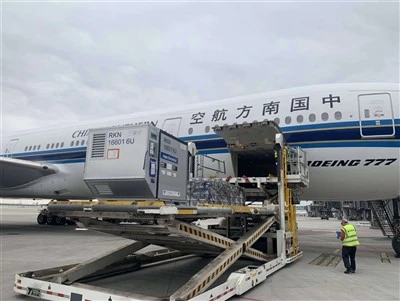
Then there’s the journey across borders, where packages can be unloaded and reloaded multiple times on planes, trucks, and trains. We’ve built exclusive partnerships with trusted carriers in every country we serve, and we don’t work with just any logistics company. Each partner has to meet our safety standards: their fleets have to have climate control for sensitive items, their warehouses have to have 24/7 security, and their staff have to complete the same safety training as our own. We also have our own dedicated fleet of aircraft for high-value shipments, which means we don’t have to rely on commercial airlines that might handle hundreds of packages a day. Our aircraft are fitted with cargo holds that have adjustable temperature and pressure controls, and our in-flight teams monitor packages 24/7 during long-haul flights. For time-sensitive medical shipments, we even have on-board refrigeration units that can maintain temperatures for up to 72 hours without power, just in case of a delay. We also use a dedicated cross-border route planning tool that maps the safest, fastest paths for each package, avoiding areas known for extreme weather or high package theft. For example, when shipping to parts of Africa, we avoid routes with unpaved roads that can cause vibration, and instead use paved highways with regular security patrols to get packages to their destinations.
Another key part of our safety protocol is insurance, but not just any insurance. We offer two levels of coverage: standard coverage that’s included in every shipment, up to $500, and premium coverage that can go up to $1 million per package, with a claims process that takes less than 72 hours to resolve. Unlike some carriers that delay claims to avoid paying out, we know that when a customer’s package is damaged or lost, they need help fast. Last year, a small business in Canada had a vintage camera lost in transit to Japan. We used our tracking data to locate the package within 48 hours (it was mistakenly sent to the wrong hub), and once we confirmed it was damaged, we processed the insurance claim and issued a full refund plus a 10% goodwill bonus before the end of the week. Our customers don’t just trust us with their packages—they trust us with their livelihoods, and that’s a responsibility we don’t take lightly.
I also want to talk about something that’s become even more important post-pandemic: sustainability and safety. A lot of people don’t realize that recycled packaging materials can be just as protective as new ones, as long as they’re tested properly. We’ve worked with a local packaging lab to develop a line of 100% recycled cardboard and cushioning materials that meet all our safety standards, and we’ve cut our use of new packaging materials by 40% in the last two years. We also have zero-waste policies in all our hubs, which means we recycle every packaging material that’s not used for a customer’s shipment, and we even reuse packaging materials that are returned by customers if they’re in good condition. This doesn’t just help the planet—it’s another layer of safety, because our testing has proven that recycled materials can absorb just as much impact as new ones, as long as they’re processed correctly.
At the end of the day, the safety of a package isn’t about one big step—it’s about hundreds of small, consistent steps that add up. It’s the packaging specialist who sits with a customer for 20 minutes to design a custom foam insert. It’s the warehouse employee who notices a crushed corner on a package and sets it aside for an inspection instead of letting it move forward. It’s the operations team that gets an alert about a temperature spike and arranges for a climate-controlled holding unit. It’s the claims team that calls a customer within an hour of a potential issue to resolve it before it becomes a problem. We don’t do this for awards (though we’ve won a few, like the International Express Safety Award three years in a row)—we do this because our customers are the reason we’ve been in business for three generations.

If you’re a business owner who ships internationally, or someone who has a valuable package to send overseas, you don’t have to guess about safety. We’ve spent decades refining every part of the process to make sure your package arrives exactly as you sent it. Whether you’re shipping a small batch of handmade goods for a holiday deadline or a sensitive medical sample that needs to stay at a precise temperature, we have the systems, the training, and the expertise to get it there safely. We’re always happy to walk you through our full safety protocol, answer any questions you have, or provide you with a custom quote for your next shipment. If you’re interested in learning more and discussing your international shipping needs, our team is ready to connect with you.
International Express Reference:
- International Safe Transit Association. (2022). Standard Practices for Packaging and Testing Parcel Shipments.
- World Customs Organization. (2023). Guide to International Shipment Security and Compliance.
- National Institute of Standards and Technology. (2021). Temperature Monitoring Protocols for Perishable Logistics.
- Global Express Association. (2022). Safety Standards for Cross-Border Logistics Operations.
Shenzhen Yihua Shang Supply Chain Service Management Co., Ltd.
As an experienced international logistics company in China, we are committed to providing high quality international express service with low price. We warmly welcome you to contact us for more information about the cheap rate international express service. Also, quotation is available.
Address: 209, Building 61, Third Industrial Zone, Zhongkeng Street, Bantian Street, Longgang District, Shenzhen
E-mail: 3809486307@qq.com
WebSite: https://www.yhs555.com/
