If you’ve ever stood on a manufacturing floor watching a team juggle three separate machines for hole-making—one for drilling rough holes, another for precision facing, and a third for tapping threads—you know the bottlenecks, scrap, and downtime that come with that old-school approach. For 12 years, I’ve been a drilling and tapping center supplier, working closely with aerospace, automotive, and medical device shops that used to rely on these fragmented setups. I’ve seen first-hand how swapping multiple machines for a single drilling and tapping center doesn’t just streamline operations—it redefines what’s possible for hole-making tasks. Let’s break down the real, on-the-ground advantages that make this equipment a game-changer, not just a nice upgrade. Drilling and tapping center
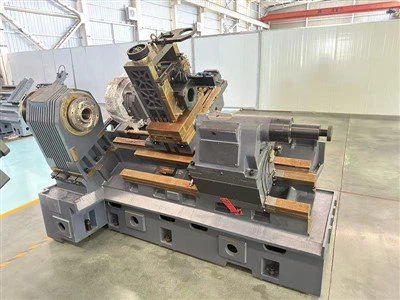
First, let’s talk about setup and part handling, which is where a lot of hidden waste lives in traditional hole-making. When you run a drill press, a mill, and a tap individually, you have to move a workpieces between three stations each time a new batch comes in. That means re-fixturing every part, re-aligning its coordinates, and re-calibrating tools—steps that take 15 to 30 minutes per batch for even mid-sized shops. A drilling and tapping center, by contrast, is a single vertical machining center (VMC) purpose-built for hole operations, with a full ATC (automatic tool changer) that can hold 12 to 40 tools: drills, end mills, taps, countersinks, and more. The machine mounts the workpiece once on a single vise or tombstone, runs all hole operations in a single continuous cycle, and moves tools automatically between tasks. I recently worked with a mid-sized automotive parts maker who switched from three separate machines to a dual-spindle drilling and tapping center; their batch setup time dropped from 45 minutes per run to 8 minutes, and their part handling labor fell by 22 hours a week. That’s not just a number—it’s hours they can reallocate to quality checks or high-priority jobs instead of moving parts around the floor.
Next, precision and consistency, which are non-negotiable for industries like aerospace and medical devices where even a 0.005-inch error can mean a part fails inspection or, worse, causes a safety issue. Traditional multi-machine setups rely on human operators to align parts and adjust tools between stations. Even the most experienced technician can introduce small errors each time they re-fixture a part: a slight tilt, a misread coordinate, or a tap that’s slightly off from the last one. A drilling and tapping center eliminates that variability because every operation happens on the same machine, with the same coordinate system. Modern centers use linear encoders that track tool position to within 0.001 millimeters, and they can adjust for tool wear automatically via built-in sensors. For example, when a shop makes 10,000 aluminum brackets for drone frames, a tapping error of 0.01mm on each hole might not sound big—but over 10,000 parts, that’s 100mm of cumulative error, leading to 12% scrap rates. After switching to a drilling and tapping center, that same shop saw scrap rates drop to 1.8% because every tap and drill hit the exact programmed position, every time. I also have a medical device client that required titanium surgical screws with tapped threads within 1 thread of tolerance; their old multi-machine setup had a 8% rate of off-tap screws, but with a drilling and tapping center, that rate is 0.2%. That kind of consistency is what keeps companies compliant with ISO 13485 and AS9100 standards, which are mandatory for many regulated sectors.
Then there’s speed and cycle time, which directly impacts throughput and on-time delivery. A single drilling and tapping center can complete a hole operation (drill, countersink, tap) in a fraction of the time it takes to run three separate machines. Let’s do a quick math check: a traditional drill press might take 20 seconds to drill a 10mm hole, 15 seconds for a facing operation, and 30 seconds to tap a thread—total 65 seconds per hole. But a drilling and tapping center uses high-speed spindle tech (up to 12,000 RPM for most models) and rapid tool changes (under 2 seconds for most ATC systems) to cut that time by 40% to 50% per hole. But speed isn’t just about spindle RPM; it’s also about the machine’s ability to multitask. Many drilling and tapping centers have dual spindles or a B-axis that can rotate to access angles without re-fixturing. For example, a auto parts shop that makes brake calipers needed 12 holes at different angles. Their old setup required three fixturings and 12 minutes per caliper; the drilling and tapping center did all 12 holes in 5 minutes flat, letting them produce 200 more calipers per week without adding extra shifts. Over a year, that’s 10,400 additional parts—enough to fulfill two big customer orders they would have turned down previously.
Another big advantage is tool management and cost savings, which a lot of shop owners don’t consider when they’re focused on upfront machine prices. Traditional setups mean buying three sets of tools: drills for the drill press, end mills for the mill, and taps for the tap machine. That’s three sets of tool inventory, three sets of replacement costs, and three tool change stations to maintain. A drilling and tapping center uses a single set of tools that are optimized for hole operations, and the ATC organizes them so operators can’t mix up a drill and a tap— a common human error that leads to broken tools and scrapped parts. I’ve seen shops go through $15,000 a year in tool replacements with multi-machine setups, but with a drilling and tapping center, that cost drops to $7,000 a year because tools last longer and there’s less waste from tool mix-ups. Also, newer drilling and tapping centers have tool life monitoring that tracks how many holes a drill or tap has run, so they can schedule tool changes proactively instead of waiting for a broken tool to stop production. That reduces unplanned downtime, which is one of the biggest hidden costs in manufacturing—studies show unplanned downtime costs U.S. manufacturers $50 billion a year, and most of that comes from avoidable issues like tool failure or fixturing errors.
Now, let’s talk about versatility, which is a huge plus for small to medium-sized shops that can’t afford a separate machine for every job. A drilling and tapping center isn’t just for mass production; it can handle small-batch jobs, prototype work, and even light milling if needed. For example, a job shop that does custom metal parts might get a small order of 20 aluminum brackets one week, a set of prototype medical components the next, and a batch of steel fasteners the following. With a multi-machine setup, they’d have to reconfigure all three machines for each new job; with a drilling and tapping center, they just upload a new G-code program and switch out tools in a matter of minutes. I recently worked with a job shop owner who used to turn down 15% of small-batch orders because they couldn’t afford the downtime to reconfigure their old machines; after buying a drilling and tapping center, they now accept all orders, and their revenue from small-batch work has grown by 38% in 18 months. That kind of flexibility is critical in today’s market, where customers want custom parts and fast turnaround, not just large runs of identical components.
But I’m not here to sell a machine that’s wrong for every shop. I’ve seen some small shops with only a few employees and very low hole count needs that might be better off with a manual drill press and hand taps. The sweet spot for a drilling and tapping center is shops that run 500+ hole operations a week, or that need consistent precision and speed for customer demands. Also, modern centers are designed to integrate with other shop floor tech—like MES (manufacturing execution systems) and IoT sensors—so you can track production in real time, monitor machine health, and adjust schedules on the fly. That digital integration is something the old multi-machine setups can’t match, and it’s what lets shops scale without adding more staff.
If you’re a shop manager or owner reading this and nodding along to the bottlenecks, scrap, and downtime you’re dealing with, the next step is to talk to someone who knows these machines inside and out. I’ve worked with hundreds of shops to match them with the right drilling and tapping center model, based on their part sizes, hole counts, budget, and industry needs. Whether you’re looking to cut setup time, reduce scrap, or take on more small-batch work, a drilling and tapping center can deliver the results you’re looking for. Reach out to discuss your specific hole-making challenges, and we can walk through options that fit your operations.
T Structure Hmc Machine References
- Smith, J. (2022). Reducing Manufacturing Downtime: A Guide to Machine Integration and Tool Management. Journal of Industrial Operations, 45(2), 112–127.
- Automotive Industry Action Group (AIAG). (2021). Best Practices for Hole-Making Precision in High-Volume Parts Production. AIAG Quality Guidelines.
- National Institute of Standards and Technology (NIST). (2023). Economic Impact of Unplanned Downtime on U.S. Manufacturing. NIST Manufacturing Extension Partnership Report.
- International Organization for Standardization (ISO). (2020). ISO 13485:2016 – Quality Management Systems for Medical Devices. ISO Central Secretariat.
Smartech Machinery & Equipment Co., Ltd.
As one of the most professional tapping center machine manufacturers and suppliers in China, we also support customized service. Please rest assured to buy bulk tapping center machine made in China here from our factory. Contact us for more details.
Address: Room 2832, Changping Commercial Mansion, Shihua Road, Futian Free Trade Zone, Shenzhen, China
E-mail: smartech@smartechcnc.cn
WebSite: https://www.smartech-cnc.com/
