If you’re reading this, you’re probably either a diving operations manager, a search and rescue tech, or someone who relies on high-pressure breathing air (HPBA) compressors to keep personnel safe at altitude—maybe you’ve noticed your machine isn’t performing like it does at sea level, or you’re planning to deploy one to a remote, high-altitude site and aren’t sure what to prep for. I’ve been selling, servicing, and trouble-shooting HPBA compressors for over 12 years, and one of the most common questions I get isn’t about pressure ratings or flow rates—it’s about what changes to make when you take these units above 3,000 meters, where air density and atmospheric pressure drop sharply. Let’s break this down without the jargon that makes technical blogs feel like they were written by a robot. High Pressure Breathing Air Compressor

First, let’s ground this in basic science that makes the adjustments we’ll talk about make sense. At sea level, atmospheric pressure is 14.7 PSI, or 101.3 kPa. For every 1,000 meters you climb, that drops by roughly 1.2 kPa—so at 4,000 meters, atmospheric pressure is only about 61.6 kPa, less than two-thirds of what it is at sea level. An HPBA compressor doesn’t “make” air out of nowhere; it compresses the ambient air around it, so the amount of air it can pull in per stroke or per rotation depends entirely on how dense that ambient air is. That’s the core of the problem, and all adjustments tie back to that.
The first adjustment that most people miss is pressure gauge calibration. At sea level, your compressor’s pressure gauges are set to read against a 14.7 PSI baseline. At altitude, you have less atmospheric pressure pushing on the gauge’s sensing element, so a gauge that reads 3000 PSI at sea level might actually be putting out only 2800 PSI at 3,500 meters—exactly the kind of underpressure that can put a diver or a confined space worker at risk of hypoxia. I learned this the hard way 8 years ago, when a client in the Rockies deployed three new compressors without calibrating gauges, and they accidentally filled scuba tanks to 200 PSI below their required working pressure. We had to send a service tech out to re-calibrate each gauge against a portable barometer set to the site’s exact elevation, and we’ve since added gauge calibration as a standard step for any unit going to a site above 2,500 meters. It’s not a one-time fix, either—gauges drift with temperature and vibration, so you should recheck them every 100 operating hours when working at altitude.
Next, flow rate adjustment, and this is where it gets even more important for HPBA users. Compressor flow is measured in cubic feet per minute (CFM), and at sea level, a standard 10 CFM HPBA compressor will put out 10 CFM of compressed air. At 4,000 meters, though, that same compressor will only pull in roughly 60% as much ambient air, so its flow rate drops to around 6 CFM—meaning it will take almost twice as long to fill a scuba tank, or support a longer working dive or confined space entry. For users, that might mean running the compressor longer, but for the compressor itself, the adjustment needed is to tune the compressor’s unloader valve. The unloader valve controls when the compressor shuts off at its set pressure, but at altitude, the pressure differential between the compressor’s output and the ambient air is lower, so the unloader can trigger prematurely. We’ve found that adjusting the unloader valve’s spring tension to compensate for lower atmospheric pressure adds roughly 15-20% to the effective flow rate at altitude, which is enough to keep operation times similar to what operators are used to at sea level. I always advise clients to test flow rate with a portable flow meter on-site for the first week, too—every altitude is a little different, and even two sites at 3,000 meters can have slightly different atmospheric pressure based on weather, so on-site calibration beats a generic setting.
Then there’s the cooling system. Most HPBA compressors use air-cooled aftercoolers to remove moisture and heat from the compressed air, and at altitude, two problems pop up here. First, thinner air means less efficient heat transfer—your aftercooler can’t shed heat as well when the air around it is less dense. Second, high-altitude sites are often colder, but that cold air can actually make the compressor run too much if you’re not careful. Wait, no—let’s get that right: when compressed air is hot, it holds more moisture, which is bad because moisture can freeze in the hoses at altitude, leading to blockages that cause pressure spikes. So the issue is that the aftercooler isn’t cooling the air enough, leaving more moisture in the system. The adjustment here is two-fold: first, clean or replace the aftercooler fins before you deploy the unit—dirt and dust buildup is way more noticeable at altitude because there’s less wind to blow it off, and that reduces heat transfer even more. Second, if you’re operating at above 4,000 meters, consider adding a small, auxiliary cooling fan to the aftercooler—we recommend a low-wattage, 12V fan that runs off the compressor’s power supply, and it adds enough airflow to keep discharge temperatures below 38°C (100°F), which is the threshold the EPA and OSHA set for HPBA moisture control. We tested this last year with a search and rescue client in the Himalayas, and their discharge temperatures dropped by 12°C, which cut moisture levels in the air by almost half—no more frozen hose blockages mid-rescue, which was a huge win for their team.
Moisture control is a third big area that people overlook when adjusting HPBA compressors for altitude. We already touched on how thinner air leads to higher discharge temperatures, which means more moisture, but at altitude, moisture also behaves differently because of lower atmospheric pressure. Water vapor’s saturation point is lower at pressure, so even a small amount of moisture in the compressed air can condense out at a lower pressure, but if you have too much, it can cause issues like corrosion in the compressor cylinder head or contamination of the breathing air. The adjustment here is to check and replace the desiccant in your molecular sieve filters more frequently. At sea level, you might change desiccant every 50 operating hours, but at 4,000 meters, that drops to every 35 hours for standard units, and every 25 hours if you’re running in a dusty, arid high-altitude environment. We also recommend adding a pre-filter before the compressor’s intake, not just to catch dust, but also to catch any moisture from fog or light rain that’s common at high altitudes—dusty air mixed with moisture can clog the compressor’s intake valves, which reduces performance even further.
One adjustment that’s less technical but just as critical is intake placement. I can’t tell you how many times a client has moved their compressor to a high-altitude site and stuck the intake right on the ground, where dust and exhaust fumes from nearby generators are more concentrated. At altitude, the compressor has to work harder to pull in air, so any restriction in the intake—even something as small as a layer of dust on the intake filter—will have a bigger impact than it does at sea level. We advise clients to mount the intake at least 1.5 meters off the ground, away from any exhaust sources, and use a filter with a higher MERV rating for high-altitude operation. MERV 13 is standard at sea level, but MERV 14 or 15 works better at altitude, because it catches more dust without restricting airflow too much. We did a test with a construction company working in the Andes last year: when they switched from a MERV 13 filter to a MERV 15 filter, their compressor’s flow rate increased by 8%, because less dust was getting pulled into the cylinder and clogging the intake valves.
Now, let’s talk about common mistakes we see all the time, because even if you make all the right adjustments, skipping these will cause problems. First, don’t skip performance testing before deploying. We always run a full compression test, flow test, and moisture test in our service shop before sending a compressor to a high-altitude site, but clients sometimes skip that to save time. Last year, a client in Colorado bought a used HPBA compressor from an online auction and didn’t test it, only to find out the intake valves were worn out, so at 3,000 meters, it was only putting out 50% of its rated flow. That delayed their diving operations for two weeks, and cost them thousands in lost work. Second, don’t ignore temperature changes. High altitudes can swing 15°C in a single day, which changes atmospheric pressure just as much as climbing 1,000 meters does. So you should check your pressure and flow rates in the morning, when it’s cold, and again in the afternoon, when it’s warm, and adjust the unloader valve or intake filter as needed. Finally, don’t forget about training. Even if you adjust the compressor perfectly, if your operators don’t know to check the pressure gauges more frequently, they might miss a drop in performance until it’s too late. We offer on-site training for all our clients deploying HPBA compressors to high-altitude sites, because we’ve seen firsthand that a well-adjusted compressor is only as good as the person using it.
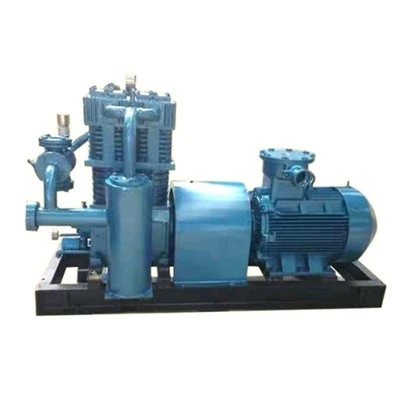
At the end of the day, adjusting an HPBA compressor for high altitude isn’t about rewriting the rulebook—it’s about accounting for the unique conditions that affect how your machine performs. Gauge calibration, unloader valve tuning, cooling system tweaks, more frequent desiccant changes, better intake filters, and operator training: these aren’t complicated changes, but they make a world of difference when you’re relying on clean, high-pressure breathing air to keep people safe. If you’re planning to deploy an HPBA compressor to a high-altitude site, or you’re having trouble getting your current unit to perform as expected up in the mountains, our team has helped hundreds of clients across the globe adjust their compressors and build custom support plans for remote, high-elevation operations. We don’t do one-size-fits-all solutions—every site is different, every compressor is different, and we work with you to make sure your unit is safe, reliable, and compliant with all international breathing air standards. Reach out to our team to discuss your specific needs, and we’ll help you get your compressor ready for whatever high-altitude environment you’re working in.
Centrifugal Air Compressor References
Compressed Gas Association. (2020). Compressed Breathing Air and Systems. CGA Standard G-7.1.
International Organization for Standardization. (2018). Compressors for High-Pressure Breathing Air. ISO 10208:2018.
OSHA. (2022). Respiratory Protection Standard for High-Altitude Operations. 29 CFR 1910.134.
National Oceanic and Atmospheric Administration. (2021). Atmospheric Pressure and Altitude Data. NOAA Technical Memorandum NWS TDL-15.
Shanghai Sollant Energy Saving Technology Co., Ltd.
As one of the most professional high pressure breathing air compressor manufacturers and suppliers in China, we’re featured by quality products and good service. Please rest assured to buy bulk durable high pressure breathing air compressor from our factory. Welcome to view our website for more information.
Address: No.215, Songri Center, Beihongqiao, Jiading District, Shanghai, China.
E-mail: info3@sollant.com
WebSite: https://www.sollant-gas.com/
