If you work in industries like metal heat treating, metallurgical testing, or small-scale specialty alloy production, a crucible furnace isn’t just a piece of equipment—it’s the workhorse that keeps your operations running. A few months back, I got a frantic call from a regular customer, a metallurgical lab manager in the Midwest, who’d just noticed their 15-year-old crucible furnace was spitting out uneven heats. The ceramic lining had tiny, hard-to-spot cracks, the element’s resistance had drifted 12% off spec, and the control panel was acting up. “How much to fix this?” she asked, half-expecting a number that would make her consider replacing the whole unit. That question is the most common one I get from furnace operators, and the short answer is: it depends on what’s broken, how old the furnace is, and what materials you prioritize. As a crucible furnace supplier with 18 years in the business, I’ve sat through far too many calls like hers, where the line between a repair that makes sense and a waste of money hinges on context no one talks about enough. Crucible Furnace
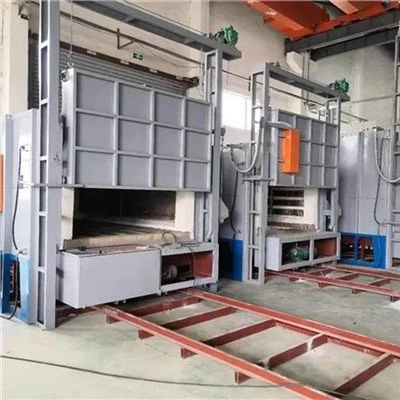
Let’s start with the core parts of a crucible furnace, because every repair ties back to one of these. The three most common failure points are the crucible itself, the heating elements, and the refractory lining. Each has a different life span, and each has a different repair cost—plus, a lot of operators skip small fixes here and there that turn into big, expensive problems later. Take the refractory lining, for example. This is the thick ceramic or fiber material that lines the furnace chamber, insulating the heat so it doesn’t escape and protecting the steel outer shell from high temperatures. For our standard industrial line of box crucible furnaces, the refractory lining is rated to last between 8 and 12 years, but that number drops hard if you’re cycling the furnace on and off every day, using corrosive alloys (like aluminum or brass), or not performing routine minor maintenance. Last year, I had a customer who ran a small foundry and kept throwing dross—oxidized metal residue—into the furnace without cleaning it out. The dross heated up to over 1,200°F, ate tiny holes into the refractory’s heat shield, and by the time he noticed, the lining had a gap so big half the heat was escaping. His repair bill that time was $1,800, which included removing the old lining, patching the gaps with refractory cement, and re-insulating the back wall. If he’d caught that gap when it was only an inch wide, the patch would have cost $250 at most. That’s the big lesson here: small, proactive repairs save you from major costs down the line.
Next, the heating elements. These are the wires or coils that actually generate the heat, mounted either along the inner walls of the furnace or around the crucible itself. For our resistance-style elements— the most common type for small to medium crucible furnaces—life span is usually 3 to 5 years, and they run anywhere from 1,000W to 10,000W depending on your furnace size. A replacement element for a 200lb capacity furnace (our most popular model) costs around $450 for a pair, and swapping them out takes about 2 hours of labor, which runs our service team at $120 an hour. That means a full element replacement is usually around $690 total. But here’s a twist: not all element replacements are the same. If your furnace is rated for 2,000°F, you can’t use a standard element rated for 1,800°F—using the wrong one will burn out in weeks, not years. I see this mistake all the time. Customers buy cheap generic elements online because they’re $200 cheaper, and end up calling us a month later with a dead furnace. The long-term cost of cutting corners on elements is way higher than paying for OEM (original equipment manufacturer) parts.
Then there’s the crucible itself. This is the container that holds your metal while it melts, and it’s the part that gets the most direct abuse. Crucibles come in different materials—graphite, silicon carbide, clay-graphite, even high-purity alumina—each for different applications. A graphite crucible for small brass melts might last 20 to 30 uses, while a silicon carbide crucible for aluminum can last 50 to 80 uses. When a crucible fails, it’s almost always because of a crack, a hole from corrosion, or distortion from overheating. Here’s the thing: you can’t repair a crucible. Once it’s cracked or corroded through, it’s done. The only “repair” is replacing it. A standard graphite crucible for a 200lb furnace is around $320, while a high-purity silicon carbide one is closer to $750. But if your furnace uses a custom-sized crucible, that cost jumps—last quarter we had a customer in the aerospace industry who needed a 500lb custom crucible for melting titanium, and that replacement was $2,100. That’s why I always tell customers to size their furnace and crucible for their actual load, not just the maximum theoretical capacity. Overloading a furnace by 20% or more will not only burn out elements faster, but also shorten crucible life by 50% or more.
Now, what about the less common, but still critical, parts? The control panel, for example. Most modern crucible furnaces have digital controls that let you set precise temperatures and ramp rates, and that’s the part that keeps your heats consistent. A control panel failure usually happens from electrical surges, or from dust and debris building up on the circuit boards. A standard digital control replacement for our mid-size furnaces is around $1,200, and that includes programming the new unit to match your furnace’s specs. If the control panel is older, analog, the cost is lower—around $500 to replace the dial and thermocouple. Last year, we had a customer whose control panel started reading temperatures 200°F higher than actual. Instead of replacing it, we diagnosed the problem as a faulty thermocouple, the sensor that measures temperature. Replacing a thermocouple is a $150 part and 30 minutes of labor, which is a huge win compared to a full control panel swap. That’s why troubleshooting is so important before jumping into any repairs. A lot of customers assume their furnace is broken when it’s just a tiny, cheap part that’s worn out.
But here’s the part no one talks about: how the age of your furnace affects repair costs. If your furnace is less than 5 years old, most repairs are still relatively low-cost, because the parts are under warranty. Our furnace line has a 3-year warranty on parts, and we offer extended service contracts for $800 a year that cover most minor repairs. But once a furnace hits 10 years old, the repair costs start going up, and sometimes it’s not worth it. Let’s do a real example: a customer with a 12-year-old 200lb box crucible furnace called us last spring. Their repair estimate was $2,200: new refractory lining ($900), new elements ($690), and a new control panel ($610). A new, comparable furnace from us costs $4,500, so half the price. But we advised them to repair it anyway, because their foundry only runs 8 hours a day, 5 days a week, and the new furnace would take 6 weeks to deliver. If their repair had been over $3,000, we would have suggested replacing it. The rule of thumb I use with customers is: if the total repair cost is more than 60% of the cost of a new, comparable furnace, it’s time to start shopping for a new unit. There’s no point in pouring money into an old furnace that will likely need another major repair in a year or two.
Wait, I should also mention on-site vs. shop repairs. A lot of small issues can be fixed in your facility, which saves money. Our service team charges $120 an hour for on-site labor, plus parts, and most small repairs take 1 to 3 hours. If you have a really big repair—like a full refractory lining replacement, or a custom control panel swap—we’ll sometimes take the furnace to our service shop, where labor is $80 an hour, but you have to pay to remove and reinstall the furnace, which adds $300 to $500 for a mid-size unit. For our customer with the dross-eaten lining, it was $100 cheaper to do the repair in-shop, but their furnace was only down for 2 days instead of 4, which was worth the extra $100 to them. That trade-off—downtime vs. cost— is something every operator has to weigh. If your furnace is the only one you have in your facility, downtime costing you $1,000 a day, it’s worth paying a little more to get it fixed fast, even if it means on-site repairs.
I also want to talk about a common myth I hear all the time: “cheap repairs are better.” A few months ago, a customer who runs a jewelry foundry called me panicking because their furnace wasn’t holding heat. They’d paid a local handyman $300 to patch the lining and replace the elements, and a week later, the furnace was still losing heat. When we went to look, the handyman had used regular mortar instead of refractory cement, which can’t handle the high temperatures, and had cut the elements too short, so they couldn’t reach the power terminals properly. We ended up redoing the entire repair, which cost $850, plus we had to replace two burnt-out elements because of the poor installation. That $300 “cheap” repair ended up costing him more than twice as much as a professional repair would have, and his furnace was down for three days, costing him thousands in lost orders. The lesson here is: always use a technician who specializes in crucible furnaces. A general handyman might know how to fix a water heater, but they don’t understand the extreme temperatures and corrosive materials that crucible furnaces deal with.
Now, let’s break down typical repair costs for common scenarios, to give you a concrete idea. For a 200lb industrial box crucible furnace, the repair costs look like this:
- Minor patch to refractory lining (less than 1 square foot): $250 total (parts + labor)
- Full refractory lining replacement: $900 to $1,100
- Full element replacement: $690 total
- Thermocouple replacement: $150 total
- Digital control panel replacement: $1,200 total
- Custom crucible replacement (standard size): $320 to $750
- Major repair (lining + elements + thermocouple): $1,740 to $2,000
- Full rebuild for a 5-10 year old unit: $2,200 to $2,800
For smaller furnaces, like the 50lb benchtop models popular for labs and small foundries, costs are lower: minor lining patches are $100, full lining replacement is $450, elements are $250, and control panels are $600. For larger industrial furnaces, like the 1,000lb models for big foundries, costs go up: full lining replacement is $2,500 to $3,000, element replacement is $1,800, and custom crucibles can be $3,500 or more.
But here’s the thing: every furnace is different, and every customer’s needs are different. I once had a customer in a school’s metalworking program, who needed a small furnace for teaching. His budget was tight, so we didn’t do a full replacement when his old furnace broke—we fixed the lining, replaced the elements, and got him up and running for $800, which was way less than a new unit would have cost. Another customer, a large aerospace foundry, needed their furnace up and running in 24 hours for a critical project, so we sent our senior technician on-site, who finished the repair in 4 hours for $1,500, even though it was a holiday. That’s why I always tell people to call me or my team first when they have a furnace issue—we can walk them through troubleshooting over the phone, give them a transparent, no-obligation quote, and help them decide if a repair is worth it, or if a new furnace is a better long-term investment.
The most important takeaway here? Crucible furnace repairs don’t have to be a guess. Routine maintenance—cleaning out dross every 20 uses, checking elements for wear every 6 months, testing temperature accuracy monthly—can cut your repair costs by 40% or more. And when you do need a repair, working with a trusted supplier means you get OEM parts, experienced technicians, and a quote that doesn’t have hidden fees.
If you’re dealing with a malfunctioning crucible furnace, or you want to learn more about maintenance to keep your repair costs low, reach out to our team to discuss your specific needs. We can help you troubleshoot minor issues, provide transparent repair quotes, and advise you on whether repairing your existing unit makes sense, or if upgrading to a new crucible furnace would be a better fit for your operations.
Car-Bottom Forging Furnace References
- Industrial Heating Society. (2022). "Service and Maintenance Guidelines for Crucible Furnaces." Journal of Industrial Heat Treating, Vol. 14, No. 3, pp. 45-52.
- American Foundry Society. (2021). "Cost Analysis of Furnace Repair vs. Replacement for Small to Medium Foundries." AFS Foundry Management Report, pp. 12-18.
- International Furnace Manufacturers Association. (2023). "Resistance Element Life Span and Compatibility for High-Temperature Furnaces." IFMA Technical Bulletin, No. 07-23.
- National Institute for Occupational Safety and Health. (2022). "Safety and Maintenance Practices for High-Temperature Metal Melting Equipment." NIOSH Engineering Report, pp. 29-35.
Danyang Dingfeng Industrial Furnace Co., Ltd.
Danyang Dingfeng Industrial Furnace Co., Ltd. is one of the most experienced crucible furnace manufacturers and suppliers in China, also supports customized service with low price. Please feel free to wholesale high quality crucible furnace made in China here from our factory. For pricelist, contact us now.
Address: Lizhuang Economic Development Zone, Danyang City
E-mail: saleszk@dffurnace.com
WebSite: https://www.dffurnace.com/
